

WE INVENT Interview with Dio Boaca - #ForTheLoveOfIdeas
Latest
Context
WPP Media hosted an online seminar (“Year Ahead”) on January 28, 2026, during which it identified four essential trends for Out-of-Home (OOH) advertising in 2026. These trends are considered fundamental to the growth and effectiveness of campaigns in the coming year.
Reference article link:
https://uk.themedialeader.com/wpp-media-outlines-four-essential-trends-in-ooh-for-2026
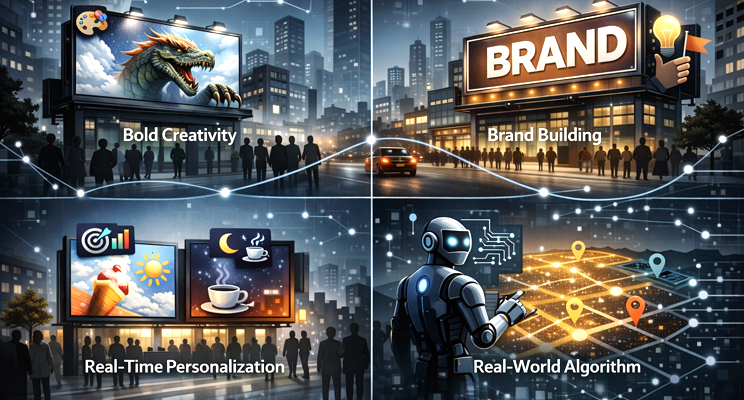
1. Creativity — “the courage to be bold”
One of the key takeaways was the importance of bold creativity in OOH. Simply displaying static ads is no longer enough; brands must adopt unconventional formats that capture attention and create memorable experiences.
Conclusion: In 2026, OOH advertising must be surprising, memorable, and capable of sparking social conversations — not merely occupying physical space.
2. The resurgence of brand building
After a period in which too much emphasis was placed on short-term sales, 2026 signals a return to brand building as a strategic priority.
Conclusion: OOH is not just a channel for immediate impact or quick conversions — it is a strategic tool for building a strong and lasting presence in consumers’ minds.
3. Relevant and respectful personalization
In 2026, personalization in OOH will not rely on cookies or individual tracking, but on data and technology that are relevant to the moment and the surrounding context.
Conclusion: OOH advertising is becoming far more dynamic and closely aligned with real audience needs, while fully respecting privacy.
4. The real-world algorithm
The concept of the “real-world algorithm” is introduced — the idea that purchase decisions do not happen in front of home screens, but on the move, on the street, and in-store.
Conclusion: In 2026, the true battleground for consumer attention is not home-based digital channels, but the street and the everyday journeys people take.